
Bounced Check — Your Legal Options
เช็คเด้ง ทำอะไรได้บ้าง?
คดีแพ่ง
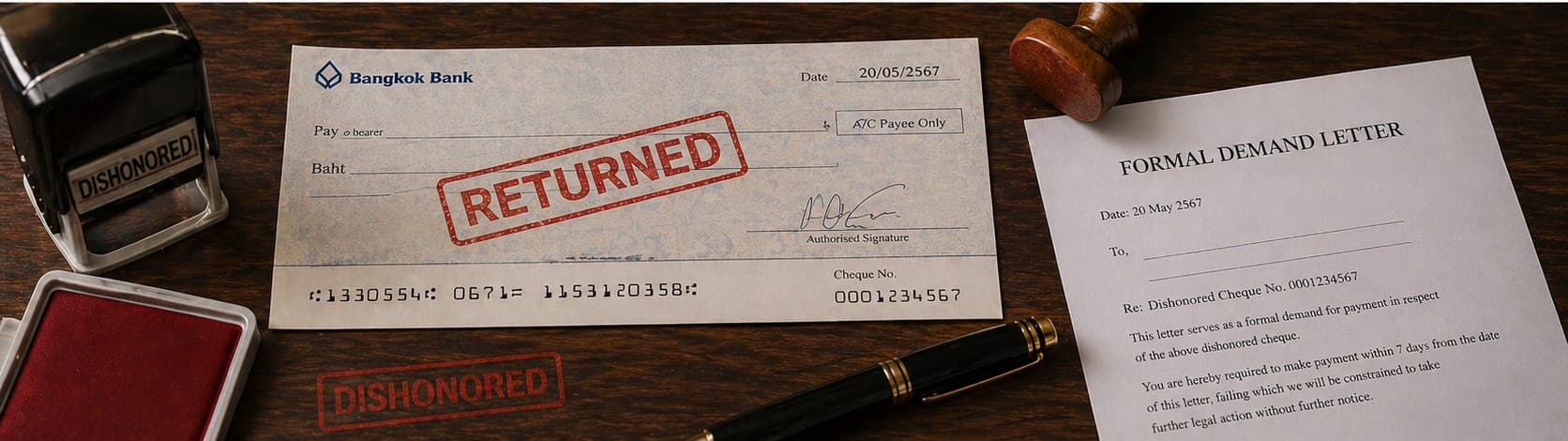
เช็คเด้งคืออะไร?
เช็คเด้ง หรือเช็คคืน (Dishonored Cheque) คือกรณีที่ธนาคารปฏิเสธการจ่ายเงินตามเช็คที่ผู้ทรงนำไปขึ้นเงิน สาเหตุที่พบบ่อยได้แก่ เงินในบัญชีไม่เพียงพอ บัญชีถูกปิด ลายมือชื่อไม่ตรงตามตัวอย่างที่ธนาคารมี เช็คหมดอายุ มีคำสั่งระงับการจ่าย หรือเช็คมีตำหนิ
เช็คเด้งสร้างความเสียหายต่อเจ้าหนี้ทั้งในแง่การไม่ได้รับเงิน และความเสียหายต่อสภาพคล่องของธุรกิจ กฎหมายไทยจึงให้สิทธิเจ้าหนี้ดำเนินคดีได้ทั้งทางแพ่งและอาญาควบคู่กัน เพื่อบีบให้ลูกหนี้ชำระเงิน
กฎหมายที่เกี่ยวข้อง
การกระทำความผิดเกี่ยวกับเช็คอยู่ภายใต้ พระราชบัญญัติว่าด้วยความผิดอันเกิดจากการใช้เช็ค พ.ศ. 2534 (พ.ร.บ. เช็ค) ส่วนสิทธิทางแพ่งอยู่ภายใต้ประมวลกฎหมายแพ่งและพาณิชย์ ลักษณะตั๋วเงิน (มาตรา 898–1000)
มาตรา 4 พ.ร.บ. เช็ค กำหนดความผิดอาญาไว้ 5 กรณี ได้แก่
- เจตนาให้ผู้ทรงเช็คเสียหาย โดยรู้ว่าตนไม่มีเงินในบัญชีพอจ่าย
- ออกเช็คโดยใช้บัญชีที่ปิดไปแล้ว
- ออกคำสั่งห้ามธนาคารจ่ายโดยไม่มีเหตุอันสมควร
- ออกเช็คแล้วถอนเงินออกจากบัญชีจนไม่พอจ่าย
- ออกเช็คโดยลายมือชื่อปลอม หรือบัญชีปลอม
โทษทางอาญา จำคุกไม่เกิน 1 ปี หรือปรับไม่เกิน 60,000 บาท หรือทั้งจำทั้งปรับ ความผิดนี้เป็น ความผิดอันยอมความได้ หมายความว่า ถ้าผู้เสียหายได้รับชำระเต็มจำนวนก่อนศาลพิพากษา คดีอาญาเป็นอันระงับ
ขั้นตอนเมื่อได้รับเช็คเด้งทีละขั้น
- นำเช็คไปขึ้นเงินที่ธนาคารภายใน 1 เดือน — นับแต่วันที่ปรากฏในเช็ค (ตามประมวลกฎหมายแพ่งและพาณิชย์ มาตรา 990) หากเกินกำหนดอาจสูญเสียสิทธิเรียกร้องกับผู้สลักหลัง
- รับใบปฏิเสธการจ่าย — เมื่อเช็คเด้ง ธนาคารจะออกใบปฏิเสธการจ่ายระบุสาเหตุ ให้เก็บเอกสารนี้ไว้เป็นหลักฐานสำคัญ
- มีหนังสือบอกกล่าวทวงถาม (Notice of Demand) — ส่งหนังสือถึงผู้สั่งจ่ายเช็คให้ชำระเงินภายใน 30 วันนับแต่ธนาคารปฏิเสธ ส่งทางไปรษณีย์ตอบรับเพื่อมีหลักฐานการรับ
- หากไม่ชำระ — แจ้งความดำเนินคดีอาญา — ที่สถานีตำรวจในท้องที่ที่ผู้สั่งจ่ายมีภูมิลำเนา หรือท้องที่ที่ออกเช็ค ภายในอายุความ 3 เดือนนับแต่ทราบการกระทำผิด
- ฟ้องคดีแพ่งควบคู่ — เรียกเงินตามเช็คพร้อมดอกเบี้ย 5% ต่อปี (อัตราตามกฎหมายปัจจุบัน) ที่ศาลที่มูลคดีเกิดขึ้น หรือศาลที่จำเลยมีภูมิลำเนา
- การบังคับคดี — เมื่อชนะคดีแพ่งและจำเลยยังไม่ชำระ บังคับคดียึดทรัพย์ สมุดเงินฝาก หรืออายัดเงินเดือนจำเลยได้
อายุความ — ทางแพ่งและทางอาญา
คดีอาญา (พ.ร.บ. เช็ค)
ตามมาตรา 5 พ.ร.บ. เช็ค อายุความ 3 เดือนนับแต่ทราบการกระทำผิด หากเลยกำหนดนี้ คดีอาญาเป็นอันระงับ ฟ้องไม่ได้ จึงต้องดำเนินการอย่างรวดเร็วหลังเช็คเด้ง
คดีแพ่ง (ตั๋วเงิน)
ตามประมวลกฎหมายแพ่งและพาณิชย์
- 1 ปี — ผู้ทรงเช็คฟ้องผู้สั่งจ่ายและผู้สลักหลัง นับแต่วันที่ในเช็ค
- 6 เดือน — ผู้สลักหลังที่ชำระแทน ฟ้องผู้สลักหลังคนก่อนหรือผู้สั่งจ่าย
- 3 ปี — กรณีฟ้องตามมูลหนี้เดิม (เช่น สัญญาซื้อขายที่ใช้เช็คชำระ) ไม่ใช่ฟ้องตามตัวเช็ค
การยอมความ — ทางออกที่ทุกฝ่ายได้ประโยชน์
คดีอาญาเช็คเป็นความผิดอันยอมความได้ ในทางปฏิบัติ ลูกหนี้มักเลือกชำระเงินเพื่อระงับคดีอาญา เพราะหากถูกพิพากษามีความผิดจะเป็นมลทินติดตัว ส่งผลต่อโอกาสทางการเงินและการประกอบอาชีพในอนาคต
ทนายความฝ่ายเจ้าหนี้มักใช้กลยุทธ์แจ้งความอาญาคู่กับฟ้องแพ่งเพื่อเพิ่มแรงกดดัน ส่วนทนายฝ่ายลูกหนี้จะพยายามเจรจาประนอมหนี้เพื่อปลดความรับผิดอาญา
ตัวอย่างกรณีศึกษา (สมมติเพื่อการศึกษา)
กรณีที่ 1 — เช็คค่าสินค้า: ร้าน A ขายของให้ลูกค้า B รับเช็ค 500,000 บาท ลงวันที่ 1 มี.ค. 2566 นำไปขึ้นเงินวันที่ 5 มี.ค. ธนาคารคืนใบปฏิเสธ "เงินในบัญชีไม่พอ" ทนายของ A ส่งหนังสือบอกกล่าว B ไม่ชำระภายใน 30 วัน A แจ้งความและฟ้องแพ่งพร้อมกัน B ตกลงชำระเต็มจำนวนก่อนศาลพิพากษา คดีอาญาระงับ คดีแพ่งถอน
กรณีที่ 2 — บัญชีปิด: นาย C ออกเช็ค 200,000 บาทให้นาย D ขณะที่บัญชีถูกปิดไปแล้ว 2 เดือน ถือว่ารู้ว่าธนาคารจะไม่จ่าย เป็นเจตนาตามมาตรา 4 พ.ร.บ. เช็ค โทษหนักกว่าเงินไม่พอ
กรณีที่ 3 — เลยอายุความอาญา: นาย E ได้รับเช็ค 1,000,000 บาท ทราบว่าเช็คเด้ง 1 มกราคม 2566 แต่ไม่ดำเนินการ มาแจ้งความ 1 พฤษภาคม 2566 (4 เดือน) เกินอายุความ 3 เดือน คดีอาญาฟ้องไม่ได้ เหลือเพียงสิทธิฟ้องแพ่งภายใน 1 ปี
ข้อผิดพลาดที่พบบ่อย
- นำเช็คไปขึ้นเงินช้าเกิน 1 เดือน — สูญเสียสิทธิไล่เบี้ยกับผู้สลักหลัง และทำให้ขั้นตอนต่อไปยุ่งยาก
- ส่งหนังสือบอกกล่าวด้วยตนเองโดยไม่มีหลักฐานการรับ — ลูกหนี้อาจปฏิเสธว่าไม่ได้รับ ควรส่งทางไปรษณีย์ตอบรับหรือใช้ทนายส่งหนังสือทวงถาม
- รออายุความอาญาผ่านไปก่อน — 3 เดือนผ่านเร็ว เสียสิทธิเข้าแจ้งความได้
- ยอมรับชำระบางส่วนโดยไม่ทำสัญญารับสภาพหนี้ — ลูกหนี้อาจอ้างว่าหนี้ลดลงเหลือเฉพาะที่ค้าง ทำให้สิทธิเรียกร้องเดิมเสียไป
- ไม่ปรึกษาทนายตั้งแต่ต้น — ขั้นตอนเช็คเด้งมีกรอบเวลาสั้นและซับซ้อน ทนายช่วยเตรียมเอกสารและบีบลูกหนี้ให้ชำระได้เร็วขึ้น
คำถามที่พบบ่อย
เช็คล่วงหน้า (Post-dated Cheque) เด้ง ฟ้องอาญาได้ไหม?
ได้ ถ้าผู้สั่งจ่ายรู้แต่แรกว่าจะไม่มีเงินในวันที่ในเช็ค หรือสั่งห้ามธนาคารจ่ายโดยไม่มีเหตุอันสมควร แต่ถ้าเป็นเหตุสุดวิสัยจริง อาจไม่เข้าองค์ประกอบความผิดอาญา
เช็คขีดคร่อมเด้ง ทำอย่างไร?
ขั้นตอนเหมือนเช็คทั่วไป แต่ต้องนำเช็คขึ้นเงินผ่านบัญชีของผู้ทรง ไม่สามารถขึ้นเงินสดได้ที่เคาน์เตอร์
ลูกหนี้ผ่อนชำระได้ไหม?
ในชั้นเจรจา ลูกหนี้และเจ้าหนี้ตกลงผ่อนชำระได้ ควรทำสัญญาประนอมหนี้เป็นหนังสือเพื่อหยุดการดำเนินคดีอาญาในระหว่างผ่อน หากผิดนัดผ่อน เจ้าหนี้สามารถฟื้นคดีต่อได้
ฟ้องเช็คเด้งใช้เวลานานแค่ไหน?
คดีอาญาเช็คมักจบใน 6–12 เดือน เพราะมีหลักฐานชัดเจน คดีแพ่งอาจ 1–2 ปีหากจำเลยต่อสู้คดี
ค่าทนายฟ้องเช็คเด้งคิดอย่างไร?
ขึ้นอยู่กับมูลค่าเช็ค จำนวนเช็ค และจะฟ้องทั้งคดีอาญาและคดีแพ่งหรือไม่ ทนายจะดูเช็คและใบคืนเช็คของธนาคารก่อน แล้วตกลงขอบเขตงานและค่าจ้างเป็นลายลักษณ์อักษรก่อนเริ่มงาน
บทสรุป
เช็คเด้งเป็นปัญหาที่พบบ่อยในธุรกิจ กฎหมายไทยให้สิทธิเจ้าหนี้ดำเนินคดีทั้งทางแพ่งและอาญา แต่ เวลาเป็นปัจจัยสำคัญ โดยเฉพาะอายุความอาญา 3 เดือนที่ผ่านไปอย่างรวดเร็ว การติดต่อทนายความตั้งแต่วันแรกที่เช็คเด้ง จะช่วยให้สามารถรักษาสิทธิและบีบให้ลูกหนี้ชำระเงินได้อย่างมีประสิทธิภาพสูงสุด
หัวข้อที่เกี่ยวข้อง
หมายเหตุ: ข้อมูลในหน้านี้เป็นข้อมูลทั่วไปเพื่อการศึกษา ไม่ใช่คำปรึกษาทางกฎหมายเฉพาะกรณี หากท่านมีคดีความหรือต้องการคำแนะนำ กรุณาติดต่อทนายความโดยตรงที่ 081-544-0944